
- Your cart is empty
- Continue Shopping
5 1: Describe and Prepare Closing Entries for a Business Business LibreTexts
- Bookkeeping
- Posted on
-
by yanz@123457

This principle is known as the double-entry accounting system and is fundamental to maintaining the accounting equation’s balance. If the debits and credits in a journal entry do not balance, it signifies an error in the transaction recording process, and accountants need to identify and rectify the issue. This represents the monetary value by which the account title mentioned in the journal entry is affected.

Which account is never closed?
Note that by doing this, it is already deducted from Retained Earnings (a capital account), hence will not require a closing entry. LO 5.1Correct any obvious errors in Bookkeeping for Painters the followingclosing entries by providing the four corrected closing entries.Assume all accounts held normal account balances in the AdjustedTrial Balance. Expense accounts have a debit balance, so you’ll have to credit their respective balances and debit income summary in order to close them. Keep in mind, however, that this account is only purposeful for closing the books, and thus, it is not recorded into any accounting reports and has a zero balance at the end of the closing process.
Closing the Income Summary Account
- Are the value of your assets and liabilities now zero because of the start of a new year?
- Below are some of the examples of closing entries that can be used to transfer revenue and expense account balances into income summary and from there to the retained earnings.
- What are your total expenses forrent, electricity, cable and internet, gas, and food for thecurrent year?
- LO 5.2Identify which of the following accountswould not be listed on the company’sPost-Closing Trial Balance.
- In this chapter, we complete the final steps (steps 8 and 9) of the accounting cycle, the closing process.
- The timing of closing entries is crucial for ensuring accurate financial reporting.
This time period, called the accounting period, usually reflects one fiscal year. However, your business is also free to handle closing entries monthly, quarterly, or every six months. To ensure the accuracy of a journal entry, the total debits must always equal the total credits.
Understanding Closing Entries: A Step-by-Step Guide with Examples

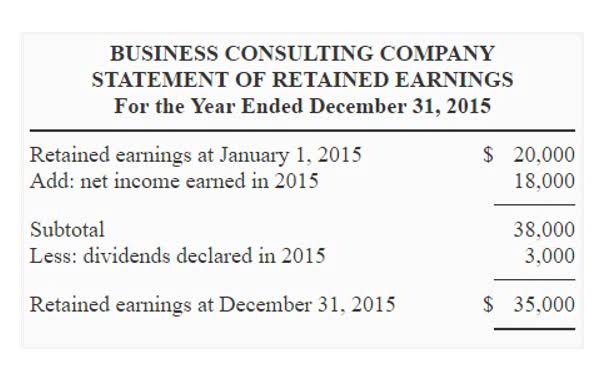
The retained earnings account balance has now increased to 8,000, and forms part of closing entries the trial balance after the closing journal entries have been made. This trial balance gives the opening balances for the next accounting period, and contains only balance sheet accounts including the new balance on the retained earnings account as shown below. If a temporary account has a debit balance it is credited to bring it to zero, and the retained earnings account is credited to balance the closing entry. Likewise, if a temporary account has a credit balance, it is debited to bring it to zero and the retained earnings account is credited. The closing entries are dated in the journal as of the last day of the accounting period. Notice that revenues, expenses, dividends, and income summary all have zero balances.
- The next step is to repeat the same process for your business’s expenses.
- This step ensures that the income or loss is accurately reflected in the company’s permanent accounts, which track long-term financial performance.
- The income summary account is then closed to the retained earnings account.
- Before we get into how to journalize closing entries in accounting, let’s first understand what they are and their significance.
- Understanding these elements is crucial for accountants to evaluate a company’s financial performance and ensure accurate financial reporting over a specific accounting period.
Dividend Accounts and Closing Journal Entries

Shaun Conrad is a Certified Public Accountant and CPA exam expert with a passion for teaching. After almost a decade of experience in public accounting, he bookkeeping created MyAccountingCourse.com to help people learn accounting & finance, pass the CPA exam, and start their career. The CLRN team is composed of dedicated education professionals, technology experts, and content reviewers who are passionate about advancing digital learning.
